
Show up ready.
A few rules decide whether your numbers are accurate. Read the full section for every test you're booked for. Questions? Call or text 864-990-4425.
These are the headlines — tap your test for the full checklist

A few minutes on an open table. Come in fasted and metal-free.
You lie fully clothed on an open-air table while the scanner arm passes over you. The scan itself usually takes 6–8 minutes — up to about 11 for larger bodies. The rest of your 30-minute appointment is your results on the big screen.
Diet & hydration
- Fast for at least 2 hours before your scan — no food or caloric drinks like smoothies. Water, electrolytes, and black coffee are permitted.
- Keep your normal hydration. Don't deliberately over-hydrate beforehand.
- Retesting? Match your prep each time (same fast, same time of day, same clothing). Consistent testing is the best way to track your progress over time.
Activity
- Skip vigorous exercise on scan day. A normal walk or walking the dog is fine — it’s training and heavy lifting we want you to skip.
Clothing & metal
- Wear something with no metal — athletic wear or leggings are ideal. Shorts, tights, compression wear, or a sports bra all work. Avoid denim, and skip thick fabrics like heavy sweatpants or fleece. Small buttons or zippers are fine.
- There’s a place to change here if you’d rather come as you are.
- Shoes come off for the scan. Socks aren’t required, but wear or bring a pair if you’d rather not walk around barefoot.
- Take off jewelry that comes off easily — rings, bracelets, necklaces, watches, fitness trackers, belts and glasses. Small studs and tiny nose piercings are fine, and so is permanent jewelry that needs tools to remove. Empty your pockets.
- Skip cologne, perfume, lotion, powder and deodorant on your torso that morning — some contain minerals that show up on the image.
Supplements & medication
- No calcium supplements (including multivitamins with calcium) or antacids such as TUMS for 24 hours before testing.
- No gastrointestinal contrast, barium, or radionuclides within 7 days of your scan — 14 days after a barium study. Contrast interferes with the reading.
During your scan
A quick, non-invasive body composition assessment done while you lie comfortably on an open-air table. Scan time is usually 6–8 minutes, up to about 11 depending on body size. Wider or taller builds may not fit inside the scan field; our GE scanner handles that with mirror mode, a validated method that reads one side and reflects it, so your results stay accurate. Radiation exposure is minimal — comparable to natural background exposure — and the scan produces highly accurate measurements of fat mass, lean muscle, and total-body bone.
Why this matters
DEXA is the gold standard for body composition, giving precise insight into fat mass, lean muscle, and bone — metrics a scale can't capture. Knowing how much muscle and bone you have, and where fat is distributed, helps identify risk factors for metabolic disease, sarcopenia, and age-related decline. An accurate baseline lets you track real change over time and make data-driven decisions about training, nutrition, and lifestyle.

Same machine, different scan. No fasting, no rest day.
This is the site-specific scan of your hips and lower spine — the one doctors use for T-scores. It has far fewer rules than the body scan, and the two get confused often enough that it's worth saying plainly: you do not need to fast, and you do not need to skip your workout.
Diet & hydration
- No fasting. Eat and drink normally on the day of your scan.
- Take your regular medications as prescribed.
Activity
- Exercise as usual. There is nothing to change about your training before a bone density scan.
Clothing & metal
- Wear something with no metal — athletic wear or leggings are ideal. Avoid denim, and skip thick fabrics like heavy sweatpants or fleece. Small buttons or zippers are fine.
- There’s a place to change here if you’d rather come as you are.
- Shoes come off for the scan. Socks aren’t required, but wear or bring a pair if you’d rather not walk around barefoot.
- Take off jewelry that comes off easily — rings, bracelets, necklaces, watches, belts. Small studs and tiny nose piercings are fine, and so is permanent jewelry that needs tools to remove.
- Skip cologne, perfume, lotion, powder and deodorant on your torso that morning — some contain minerals that show up on the image.
Supplements & medication
- No calcium supplements for 24 hours — including multivitamins with calcium, and antacids such as TUMS. Calcium is exactly what this scan measures, so a supplement in your system can skew the reading. Calcium-rich food is fine.
- No gastrointestinal contrast, barium, or radionuclides within 7 days of your scan — 14 days after a barium study.
Tell us before your scan
Let us know about hip or spine hardware — a replacement, rods, screws or a spinal fusion — or a previous fracture at either site, so we scan the sites that will give you a usable number. Tell us if there is any chance you are pregnant. And if you have had a bone density scan before, anywhere, let us know: comparisons are only meaningful between scans done the same way, so we will tell you what is and isn't comparable.
Why this matters
Osteoporosis is silent — the first sign is usually the fracture. A site-specific DEXA of the hips and lower spine is the test physicians use to diagnose osteopenia and osteoporosis and to track bone loss over time. The prep is minimal, but the calcium rule genuinely matters: an undissolved supplement sitting over the spine can read as bone. One 30-minute visit gives you the number, with no referral needed.
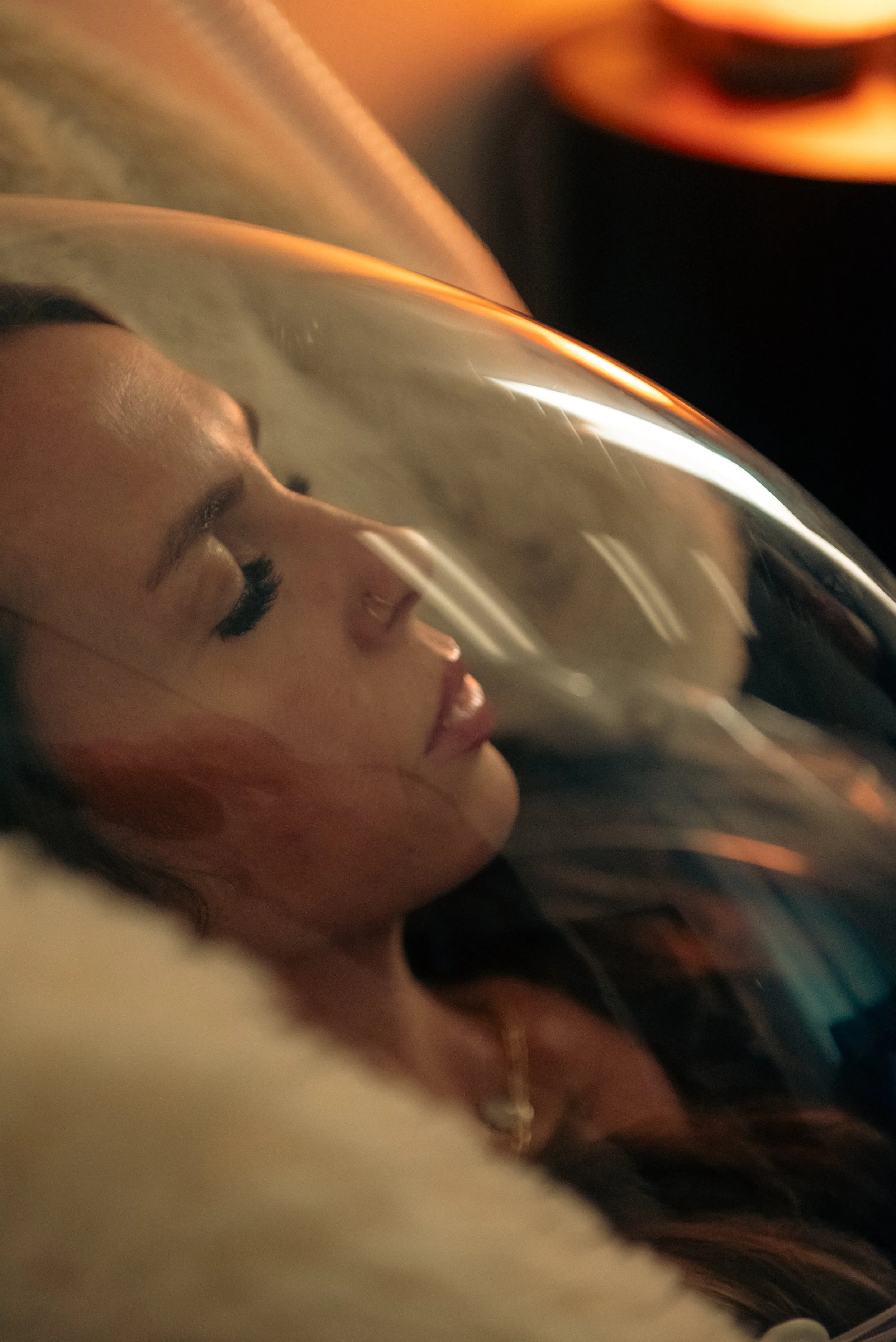
Fifteen minutes under a canopy. Fasted, decaffeinated, and calm.
You recline while a clear, lightweight canopy rests over your head — no mask on your face, no nose clip. Lights dimmed, music low. The more relaxed you are, the more accurate the number.
Diet & hydration
- Fast for at least 5 hours from your last meal — no food or caloric drinks. Water is permitted.
- An overnight fast isn’t required — 5 hours is enough. For early-morning tests, though, an overnight fast often works best, and it’s where we’ve seen some of our cleanest results.
- Normal hydration. Don't deliberately over-hydrate beforehand.
Activity
- Nothing above zone 2 for 24 hours — exercise raises metabolic rate temporarily. Walking the dog or easy yoga is fine.
Stimulants & substances
- No caffeine on test day. If you're booked in the morning, that's simply none since the night before.
- No nicotine for at least 3 hours.
- No alcohol for 12–24 hours.
Rest & environment
- Arrive rested and relaxed. A calm nervous system gives a more accurate reading.
- Avoid extreme heat or cold right before your test where you can.
- Wear comfortable, relaxed clothing — you'll be reclining.
During your test
A non-invasive metabolic test done while you rest quietly and breathe normally under a ventilated canopy. Every client gets a clean canopy and a new medical-grade filter. The measurement runs 10–15 minutes once your breathing is stable. Stay still and quiet — talking, fidgeting, or falling asleep all shift the result.
Why this matters
Your resting metabolic rate is the number of calories your body burns at rest for breathing, circulation, and cellular repair — the majority of what you burn in a day. Measuring it directly is far more accurate than the formulas most apps and plans use, which can miss by 30–40%. Knowing your real number is the basis for a calorie target that actually works.

A true maximal effort. Rested, recovered, and cleared.
A graded test that starts easy and builds until you reach your limit — walking, running, or on your own bike. You'll wear a mask that measures your breathing and a chest-strap heart rate monitor. Most people walk it.
Safety first
This is a maximal exercise test, not a medical stress test. You'll push to your threshold and possibly your maximum heart rate. We monitor heart rate for training-zone purposes via a chest strap; we do not monitor vital signs the way a stress test does. If you have any medical condition or injury, or take medication that affects heart rate or breathing (beta blockers especially), get cleared by your healthcare provider first and call us before your test date.
Nutrition
- Keep your normal diet for 1–2 days before.
- Test fasted, or eat a familiar, light meal 3–5 hours before — oatmeal, toast, a banana. Nothing you wouldn't normally eat.
- Avoid large, high-fat, or high-fiber meals; they cause discomfort at maximal effort.
- Booked a VO2 Max after a fasted test? If you’re doing a DEXA or RMR in the same visit, those require a fast — but you don’t have to run on empty. A gel, chew, or carb drink right before the VO2 is fine and won’t hurt your VO2 max. It can lower your fat-burning numbers, though, because your body burns the carbs you just took in first. If fat vs. carb burning is what you care about most, test fasted. Either way, do the same thing every time you retest.
Stimulants & substances
- No caffeine for 12–24 hours — coffee, tea, energy drinks, or pre-workout. Caffeine changes heart rate and raises fat burning during exercise, which would skew your fat/carb results. Bring coffee for afterward, or we'll make you a Keurig cup in the office while we go over your results.
- No alcohol or tobacco for 12–24 hours.
- Avoid supplements or cold medications that affect performance or heart rate.
Training, sleep & hydration
- No vigorous exercise for 24–48 hours. Light activity is fine — the goal is to arrive recovered.
- Aim for 7–9 hours of sleep the night before.
- Hydrate consistently in the days before; avoid large volumes right before your appointment.
Your choice of test
- Treadmill — walking with rising incline (up to 25%) through fast running (down to ~4:30/mile). No running required.
- Your own bike — road, gravel, mountain, or tri. Most thru-axle frames and cassettes fit; call to confirm.
- Your own rower — bring it and we'll test you on it.
On the day
- Wear workout clothing and athletic shoes.
- You'll wear a mask that measures oxygen and CO2, plus a chest-strap heart rate monitor. Bring your own strap if you like; if it won't connect to our cart, we have sanitized ones.
- Bring a towel and a change of clothes, plus a snack for afterward. Bring coffee for afterward, or we'll make you a Keurig cup in the office while we go over your results.
- Retesting? Match your prep each time (same time of day, same food and fueling, same test type). Consistent testing is the best way to track your progress over time. Most clients retest every 3–6 months.
Why this matters
VO2 max is one of the strongest known predictors of longevity and cardiovascular health. Higher aerobic capacity is associated with lower all-cause mortality, better metabolic health, and greater physical resilience and independence with age. Your result is scored against age-based benchmarks and used to set training zones that support performance now and healthspan later.
Booking a pack? Follow the strictest rule for each item.
For the DEXA + RMR Pack, the RMR rules cover both tests: 5-hour fast, no caffeine that day, no hard exercise for 24 hours, and metal-free clothing for the scan. For The Works or any pack with a VO2 Max, add the 24–48 hour rest and the 12–24 hour caffeine cutoff, bring shoes and a towel, and get cleared by your doctor if any of the safety notes apply. Adding a body scan to a bone density scan? Follow the body scan rules — the 2-hour fast and no hard workout — on top of the 24-hour calcium rule. A morning appointment makes the fasting easy.
Prepped and ready?
Free parking out front. Waiting room with a restroom if you're early. Need to reschedule? Use the link in your confirmation email up to 48 hours before, or call 864-990-4425.